
मधु (शहद)
Dairy / Animal ProductsVirya: Sita (cooling)
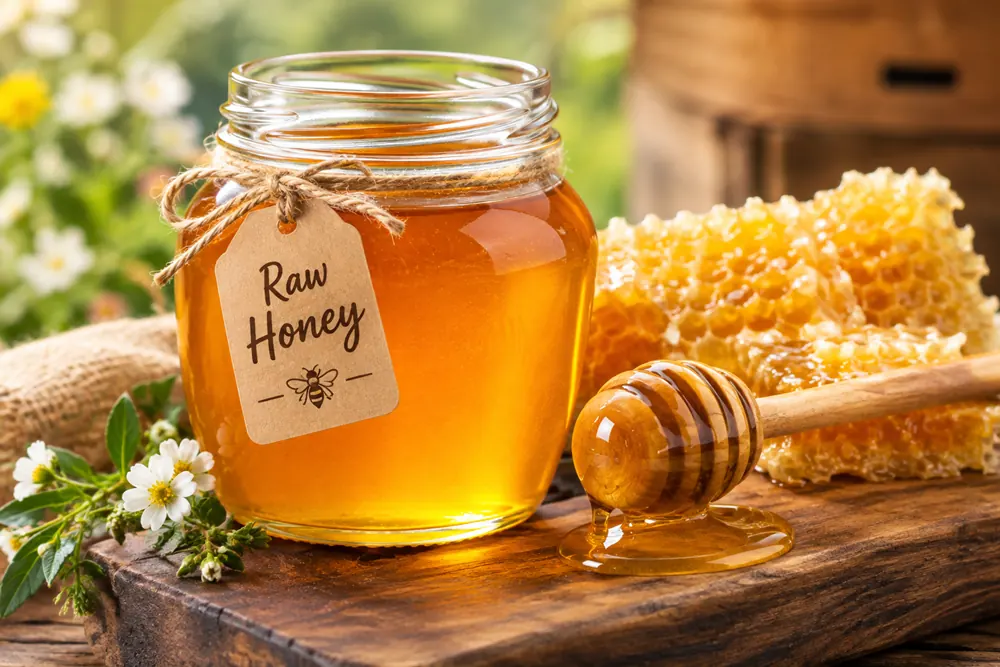
Raw Honey
Botanical: Apis mellifera • Classical: मधु
Raw honey is unheated honey traditionally used in Ayurveda as Madhu — a yogavahi anupana that soothes the throat, reduces Kapha and carries other herbs in cough and congestion.
Dosha Karma: Traditionally considered balancing for Kapha and Pitta in small amounts; its dryness may aggravate Vata if overused. Heated honey is avoided in classical practice.
Part of 2 Desi Nuskhe Formulations
Ayurvedic Energetics (Dravyaguna)
Taste (Rasa):
Madhura (sweet)Kashaya (astringent)
Physical Attributes (Guna):
Laghu (light)Ruksha (dry)Vishada (clearing)
Potency (Virya):Sita (cooling)
Post-Digestive Effect (Vipaka):Katu (pungent)
Standard Therapeutic Dosages
Churna (Powder):1/2-2 tsp as anupana (not a churna; mix with powders only when cool)
Kashayam (Decoction):Do not boil or heat honey; add only after tea has cooled to warm
Safety & Contraindications
- •Never heat honey or add it to boiling water, milk or tea. Classical texts treat heated honey as harmful.
- •Do not give honey to infants under one year of age because of the risk of infant botulism.
- •People with diabetes, pollen or bee-product allergy, or those taking medicines should consult a qualified healthcare professional before using honey as a regular remedy.
- •Avoid mixing honey and ghee in equal quantities; this combination is classically described as incompatible (viruddha).
- •Use modest amounts. Excess sweetness can burden digestion; stop use if allergy, rash or significant discomfort occurs.
Botanical Monograph & Clinical Profile
Raw honey is unpasteurised, unheated honey produced by honeybees (Apis mellifera and related species). In Ayurveda it is called Madhu (Hindi: शहद ). It is classically described as madhura and kashaya in taste, laghu and ruksha in quality, sheeta in potency, and katu in vipaka — sweet on the tongue, yet light and drying after digestion.
Madhu is yogavahi: it is said to carry other substances more deeply into the tissues. A small amount is a traditional anupana for Kasa (cough) and Pratishyaya, often with black pepper, dry ginger or herbal churnas. Ayurveda is strict that honey must never be heated or added to boiling liquid; heated honey is considered harmful. Prefer raw, unprocessed honey at room temperature or in food that has cooled. Culinary teaspoons are the usual household amount; it is not suitable for infants under one year of age.
Documented Therapeutic Benefits
Traditionally used to soothe the throat and ease cough, especially as an anupana.
May help reduce Kapha stickiness while remaining lighter than other sweeteners.
Yogavahi quality is said to support the action of accompanying herbs and spices.
Used in small amounts as a kitchen sweetener when it is not heated.
Classical Indications (Roga Ghnata)
Traditionally used for Kasa (cough), Pratishyaya and throat irritation, often with black pepper or ginger.Used as anupana for Kapha-reducing churnas, taken only in cool or lukewarm mixtures.Used in household licks and pastes (avaleha-style) that are never cooked after honey is added.Used in small culinary amounts in cooled teas, dressings and uncooked preparations.
Desi Nuskhe Incorporating Raw Honey2 recipes
Kali Mirch aur Shahad
Black Pepper and Honey
A simple lick traditionally used to help clear Kapha mucus, soothe the throat and ease a productive respiratory cough.
Tulsi Adrak Chai
Tulsi Ginger Tea
A warming household tea traditionally used to soothe cough, clear mild nasal congestion and support the throat during Kasa-Pratishyaya.