
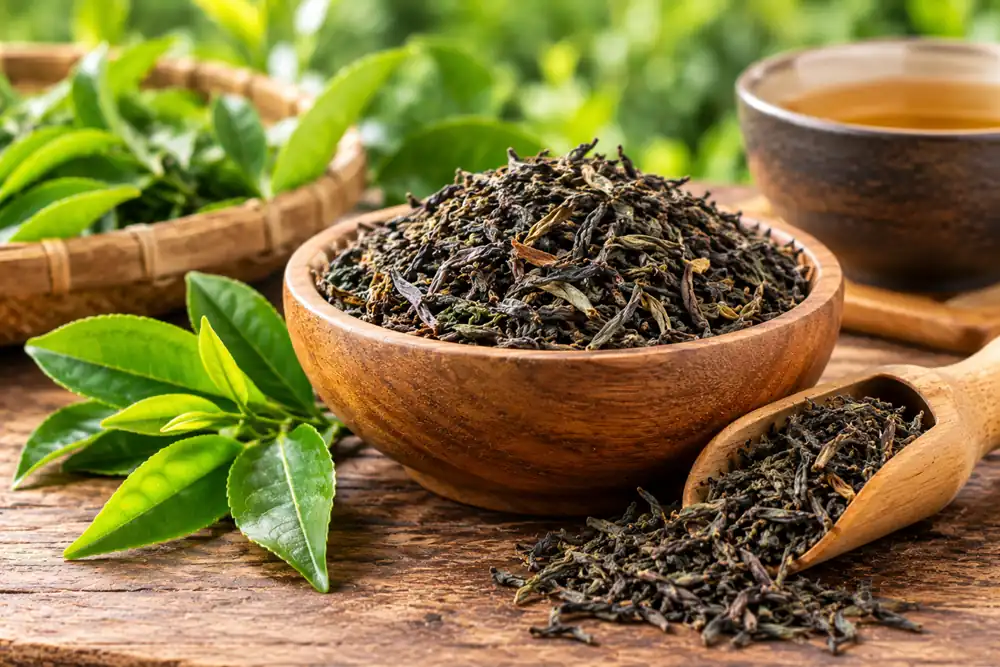
Chaha (Chai patti)
Leaf / HerbVirya: Ushna (heating)
Tea Leaves
Botanical: Camellia sinensis • Classical: Chaha
Tea leaves are the dried leaves of Camellia sinensis, a bitter-astringent, heating kitchen infusion used for alertness and light Kapha, but drying and stimulating if overused.
Dosha Karma: May reduce Kapha in small amounts; excess readily aggravates Pitta and Vata because of heat, dryness and stimulation.
Part of 0 Desi Nuskhe Formulations
Ayurvedic Energetics (Dravyaguna)
Taste (Rasa):
Tikta (bitter)Kashaya (astringent)
Physical Attributes (Guna):
Laghu (light)Ruksha (dry)
Potency (Virya):Ushna (heating)
Post-Digestive Effect (Vipaka):Katu (pungent)
Standard Therapeutic Dosages
Churna (Powder):Not typically used as churna; 1-2 g dried leaf per cup
Kashayam (Decoction):150-200 ml light infusion; avoid long boiling of strong tea
Safety & Contraindications
- •Contains caffeine. Excess may cause insomnia, palpitations, anxiety, tremor or acidity.
- •People with reflux, ulcers, marked Pitta, anxiety, insomnia, or Vata dryness should limit or avoid strong tea, especially on an empty stomach.
- •Tea tannins can reduce iron absorption; leave a gap around iron-rich meals or iron supplements if this is a concern.
- •Pregnant people, children, and those taking medicines (including for blood pressure, anxiety or sleep) should seek professional advice before using tea as a regular stimulant.
- •Do not confuse tea leaves with tulsi. For cough and congestion, tulsi or ginger infusions are the more traditional kitchen supports.
Botanical Monograph & Clinical Profile
Tea leaves are the processed leaves of Camellia sinensis, known in Hindi as chai patti. Tea is not a classical Charaka-era dravya; it entered Indian kitchen use later. In contemporary Ayurvedic reading it is tikta and kashaya (bitter and astringent), laghu and ruksha (light and dry), and ushna (heating), with a stimulating effect from caffeine.
A modest cup may feel clearing for Kapha and helpful after a heavy meal. Excess tea commonly aggravates Pitta (acidity, heat, restlessness) and Vata (dryness, insomnia, jitteriness). It is not a substitute for tulsi or ginger tea in cough care. Prefer a light infusion rather than a long, strong decoction, and avoid it on an empty stomach if you have reflux or feel ungrounded.
Documented Therapeutic Benefits
A light cup may support alertness and a feeling of clarity.
Bitter-astringent taste may feel reducing to excess Kapha after heavy food.
Used as a kitchen beverage, often with ginger, cardamom or milk according to local habit.
Classical Indications (Roga Ghnata)
Used as a mild after-meal drink when digestion feels heavy, in modest amounts.Used as a household infusion; not a classical Kasahara herb like tulsi or ginger.Sometimes combined with digestive spices in masala chai; milk and sugar change its effect and can increase Kapha.