
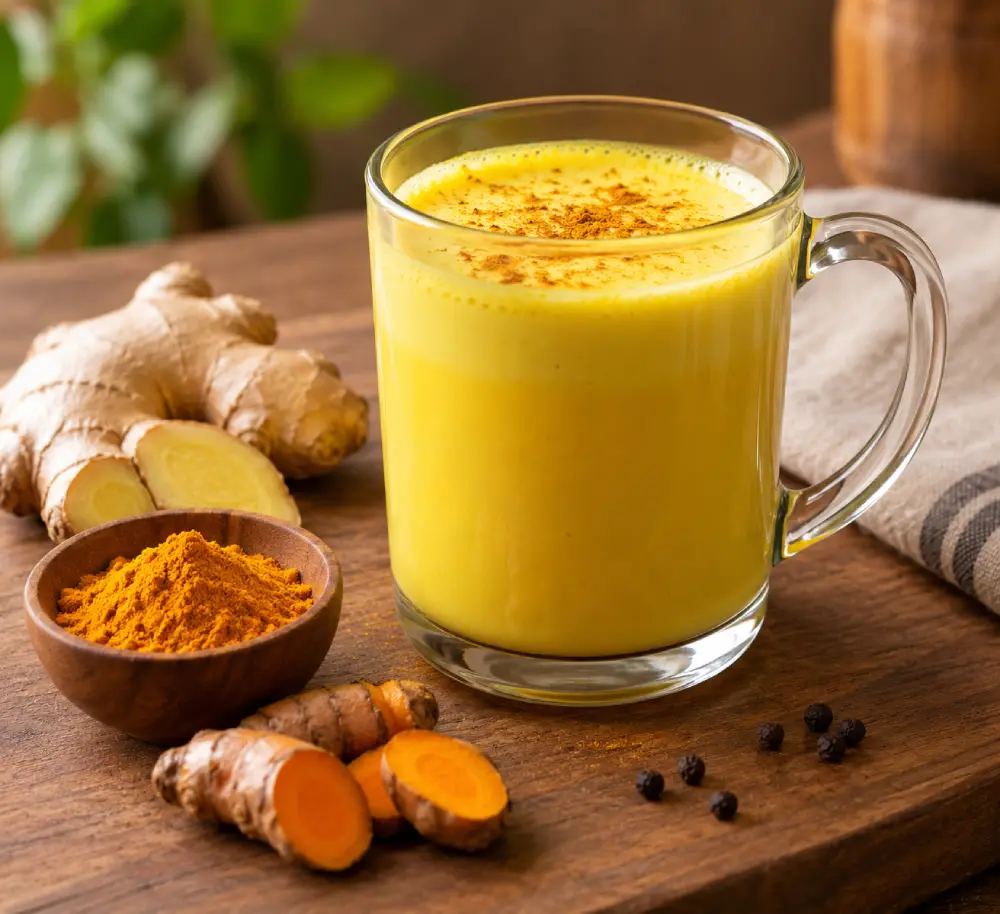
Ginger Turmeric Milk
Reduces inflammation, supports joint health, strengthens immunity, and promotes restful sleep.

Required Ingredients
6 itemsFull-fat dairy milk works best. Use oat or almond milk if you are lactose intolerant, though Ayurveda traditionally uses cow's milk.
Use raw turmeric if available — grate about 1 inch. Dried powder works fine too.
Grated or thinly sliced. Dry ginger powder (¼ tsp) can be substituted.
Do not skip this. It activates curcumin absorption significantly.
Optional but recommended. Helps fat-soluble compounds in turmeric absorb better.
Add only after the milk cools slightly below 60°C. Honey turns toxic when heated above that temperature according to Ayurveda.
Administration Guidelines (Vidhi)
"Called Haldi Doodh in most Indian households, this drink has been around long before it got trendy abroad. Grandmothers across India gave it to children after a fall, during a cold, or just through winter as a habit. Ayurveda classifies turmeric as a Tridosha pacifier in small doses — it cuts through Ama (toxins), clears Srotas (channels), and works as a Rasayana when taken consistently. Ginger adds digestive fire (Agni) and helps the body absorb what turmeric offers. Black pepper is not an optional garnish here — the piperine in it makes curcumin from turmeric actually bioavailable. Without it, most of the curcumin passes through unabsorbed."
Step-by-Step Preparation (Nirmana Vidhi)
Follow these instructions precisely to preserve the delicate volatile compounds and medicinal potency.
Important Preparation Precautions
- •Do not boil on high heat — it destroys some of the active compounds in both ginger and turmeric.
- •Never add honey to boiling or very hot milk. Let it cool to a warm, drinkable temperature first.
- •Start with ¼ tsp of turmeric if you have a sensitive stomach and increase gradually.
- •Turmeric stains clothing and surfaces permanently. Be careful while handling the powder.
Contraindications: Who Should Avoid
- ✕People on blood-thinning medications (like warfarin) should check with their doctor — both turmeric and ginger have mild anticoagulant effects.
- ✕Avoid if you have gallstones or bile duct obstruction. Turmeric stimulates bile production.
- ✕Not recommended during pregnancy in therapeutic doses without medical advice. Culinary amounts in food are generally fine.
- ✕Those with Pitta imbalance or acid reflux should use ginger cautiously — start with a very small amount and see how the body responds.